
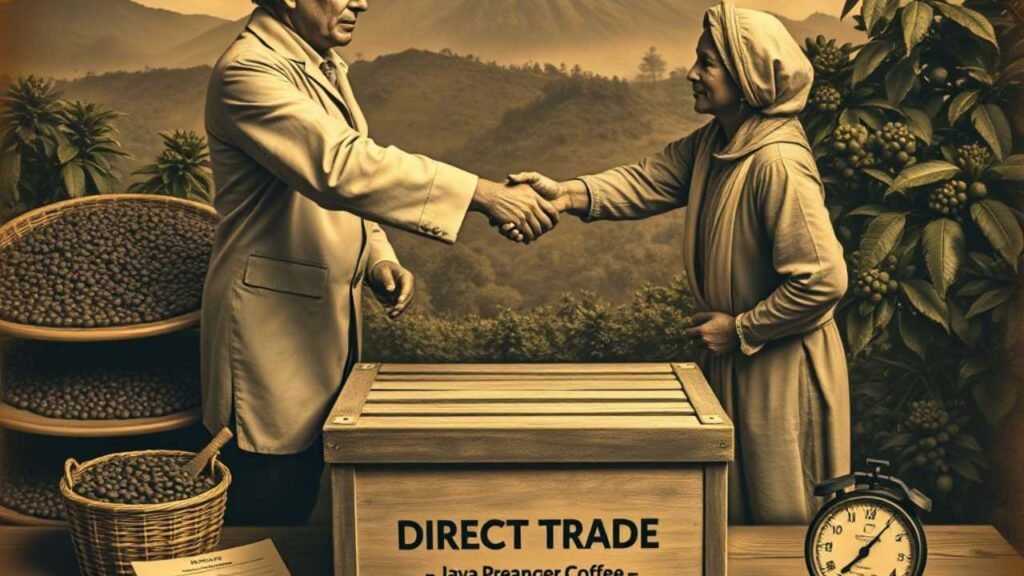
In the specialty coffee world, direct trade Java Preanger coffee represents the gold standard for quality and ethical sourcing. Grown in the volcanic highlands of West Java, Java Preanger arabica offers a distinctive floral aroma and tea-like clarity that has captivated coffee connoisseurs worldwide. Unlike conventional coffee supply chains that involve multiple intermediaries, direct trade establishes transparent relationships between farmers and roasters, ensuring fair compensation and exceptional quality control.
At Java Preanger, we’ve pioneered direct trade relationships with smallholder farmers in the Parahyangan region, cutting out middlemen to deliver authentic Java Preanger coffee with complete traceability. This comprehensive guide explores why direct trade matters, how it benefits both farmers and buyers, and what to look for when sourcing genuine direct trade Java Preanger coffee.
Table of Contents
-
What Makes Java Preanger Coffee Unique?
-
The Direct Trade Difference: Benefits for Farmers and Buyers
-
How to Identify Authentic Direct Trade Java Preanger Coffee
-
The Java Preanger Supply Chain: From Farm to Cup
-
2024 Direct Trade Price Benchmarks and Quality Standards
-
Building Sustainable Direct Trade Relationships
-
FAQ: Direct Trade Java Preanger Coffee
-
How to Source Ethical Java Preanger Coffee
What Makes Java Preanger Coffee Unique?
Java Preanger arabica, cultivated in West Java’s volcanic soil at 1,200-1,600 meters above sea level, stands apart for several reasons:
-
Historical significance: One of Indonesia’s original arabica varieties, with cultivation dating back to the 17th century
-
Terroir-driven profile: Volcanic minerals create a signature clean cup with floral notes and bright acidity
-
Traditional processing: Most farms still use the wet-hulling (Giling Basah) method perfected over generations
-
Limited production: Smallholder farms typically cultivate just 2-5 hectares each
Flavor Profile Comparison:
| Characteristic | Java Preanger | Commercial Java | Sumatran Mandheling |
|---|---|---|---|
| Aroma | Floral | Nutty | Earthy |
| Acidity | Bright | Low | Very low |
| Body | Medium-light | Medium | Heavy |
| Aftertaste | Clean, long | Short | Lingering |
Insight: Authentic direct trade lots from Java Preanger maintain these distinctive characteristics through careful harvesting and processing.
The Direct Trade Difference: Benefits for Farmers and Buyers
For Farmers:
-
25-40% higher prices compared to conventional market rates
-
Long-term contracts providing financial stability
-
Technical support for quality improvement
-
Premium payments for specialty-grade lots
For Buyers:
-
Full traceability to individual farms or cooperatives
-
Consistent quality through direct quality control
-
Unique micro-lots unavailable on the open market
-
Authentic stories to share with customers
Price Comparison (2024):
| Sourcing Model | Price per kg (FOB) | Farmer Share | Quality Assurance |
|---|---|---|---|
| Conventional | $8-$10 | 40-50% | Minimal |
| Direct Trade | $12-$18 | 65-75% | Full control |
How to Identify Authentic Direct Trade Java Preanger Coffee
5 Key Indicators:
-
Named farms or cooperatives – Specific origin information beyond just “West Java”
-
Harvest date transparency – Exact picking and processing dates
-
Farmer payment verification – Documentation of premium payments
-
Regular farm visits – Evidence of buyer presence at origin
-
Quality consistency – Multi-year quality reports available
Red Flags:
-
Vague descriptions like “Java coffee” without Preanger specification
-
Unwillingness to share farmer payment structures
-
Prices significantly below market rates for specialty grade
Case Study: Java Preanger provides annual transparency reports showing exactly how much farmers earn per kilogram.
The Java Preanger Supply Chain: From Farm to Cup
Direct Trade Journey:
-
Selective Harvesting (May-September)
-
Only ripe cherries picked by hand
-
Same-day processing begins
-
-
Farm-Level Processing
-
Traditional wet-hulling method
-
Patio drying on raised beds
-
-
Quality Control
-
Moisture testing (target: 10-12%)
-
Screen sorting (16-18 preferred)
-
-
Export Preparation
-
GrainPro packaging for freshness
-
Full documentation including:
-
Farm origin certificates
-
Harvest dates
-
Cupping scores
-
-
-
Direct Shipping
-
No middlemen or blending
-
Fast transit to preserve freshness
-
2024 Direct Trade Price Benchmarks and Quality Standards
Current Market Prices:
| Grade | Price Range (FOB) | SCA Score | Typical Use |
|---|---|---|---|
| Specialty | $14-$18/kg | 84+ | Single-origin |
| Premium | $12-$14/kg | 80-83 | Blends |
| Commercial | $8-$11/kg | <80 | Commodity |
Quality Metrics:
-
Defects: 0-3 per 350g for specialty grade
-
Moisture: 10-12%
-
Density: High (hard bean)
-
Screen size: 95% above screen 16
Building Sustainable Direct Trade Relationships
Best Practices:
-
Farm Visits – Annual trips to maintain relationships
-
Quality Incentives – Bonus payments for high-scoring lots
-
Long-Term Contracts – 3-5 year agreements
-
Community Support – Investments in:
-
Processing equipment
-
Organic certification
-
Education programs
-
Example: Java Preanger funds water filtration systems for partner farming communities.
FAQ: Direct Trade Java Preanger Coffee
1. What’s the minimum order quantity for direct trade?
Most authentic direct trade relationships start at 300kg (5 bags), with larger commitments (1MT+) securing better pricing.
2. How do payments work in direct trade?
Typically 30-50% deposit upon contract signing, with balance paid upon shipment. Farmer payments are made separately at time of purchase.
3. Can I visit the farms?
Reputable direct trade partners like Java Preanger arrange farm visits for serious buyers.
4. How does direct trade impact quality?
Eliminating middlemen means:
-
Faster processing after harvest
-
More careful cherry selection
-
Better preservation of intrinsic flavors
How to Source Ethical Java Preanger Coffee
For roasters and importers committed to authentic direct trade Java Preanger coffee, Java Preanger offers:
-
Verified direct relationships with West Java farming families
-
Complete transparency from cherry to shipment
-
Customizable quality specifications for your exact needs
-
Sustainable pricing models that support farm communities
Ready to experience true direct trade? Contact our team to discuss current harvest availability and sampling options.