
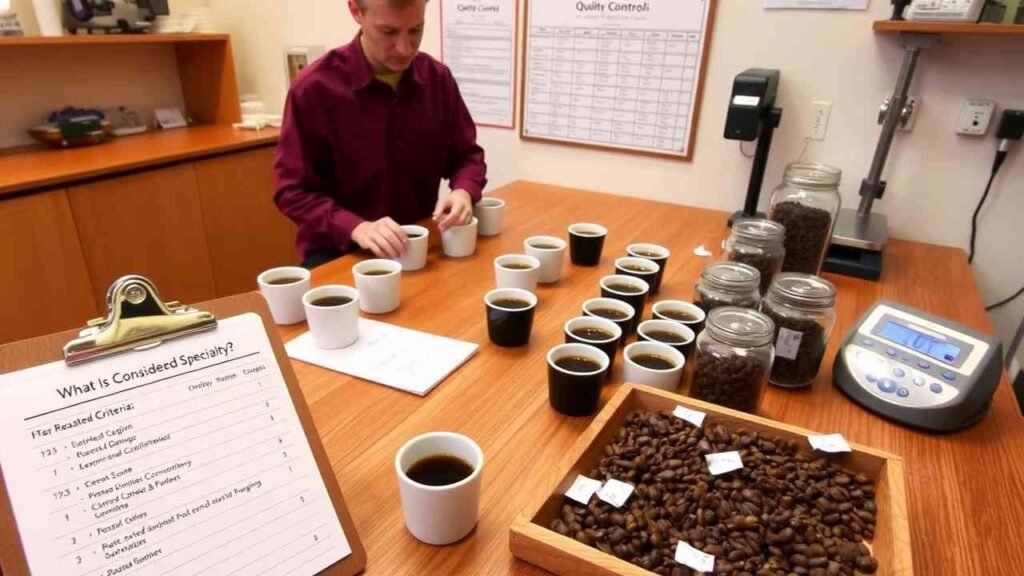
When coffee professionals discuss what is considered specialty coffee, they’re referring to the top 1-3% of all coffee produced worldwide – beans that meet exceptionally high standards for quality, flavor, and production methods. Unlike commercial-grade coffee, specialty coffee must score 80+ points on the Specialty Coffee Association’s (SCA) 100-point scale and exhibit zero primary defects. For those seeking certified specialty grade Java Preanger coffee from Indonesia’s volcanic highlands, javapreanger.com offers direct access to 86-88 point lots with full traceability from farm to roaster.
This comprehensive guide will explain:
✔ The precise criteria that define specialty coffee
✔ How Q Graders evaluate coffee quality
✔ Key differences from commercial coffee
✔ Where and how specialty coffee grows
✔ How to verify you’re buying genuine specialty beans
Whether you’re a coffee professional or enthusiast, understanding what qualifies as specialty coffee will forever change how you select and appreciate your brew.
The Official Specialty Coffee Standards
According to the Specialty Coffee Association (SCA) and Coffee Quality Institute (CQI), coffee must meet these rigorous standards:
1. Minimum Quality Score of 80+
-
Evaluated by certified Q Graders using strict protocols
-
Assessed across 10 categories including:
-
Aroma
-
Flavor
-
Aftertaste
-
Acidity
-
Body
-
Balance
-
Uniformity
-
Clean cup
-
Sweetness
-
Overall impression
-
2. Defect-Free Beans
-
Zero primary defects (black beans, sour beans, severe insect damage)
-
Maximum 5 secondary defects per 350g sample
-
Uniform size and shape (screen 15-18 preferred)
3. Traceable Single Origin
-
Known farm, cooperative, or micro-region
-
Elevation (typically 1,200+ meters)
-
Harvest date within past 12 months (for green beans)
Specialty Coffee vs Commercial Coffee: Key Differences
| Characteristic | Specialty Coffee | Commercial Coffee |
|---|---|---|
| Quality Score | 80-100 points | Below 80 points |
| Bean Selection | Hand-picked at peak ripeness | Machine harvested, mixed ripeness |
| Processing | Precision methods (washed, honey, natural) | Bulk processed |
| Defects | 0-5 per 350g | 6-86+ per 350g |
| Flavor | Complex, distinctive origin characteristics | Flat, generic, often bitter |
| Price | $8-$40/lb roasted | $1-$5/lb roasted |
Example: Java Preanger from javapreanger.com consistently scores 86-88 points with chocolate-spice notes.
The Specialty Coffee Grading Process
Step-by-Step Evaluation:
-
Visual Inspection (300g green bean sample)
-
Roasting (SCA standard light roast profile)
-
Fragrance/Aroma Assessment (dry and wet grounds)
-
Cupping (Multiple tastings at different temperatures)
-
Scoring (Each category rated 6-10 points)
-
Final Calculation (Average of all categories)
Grading Scale:
-
90-100: Outstanding (rare microlots)
-
85-89.99: Excellent (most specialty coffee)
-
80-84.99: Very Good (entry-level specialty)
-
Below 80: Commercial grade
Physical Characteristics of Specialty Coffee
Green Beans Must Have:
✅ Uniform size (screen 15-18 optimal)
✅ Deep green color (not yellow or brown)
✅ No visible defects (cracks, holes, stains)
✅ Proper moisture content (10-12%)
✅ Fresh crop (current or previous harvest year)
Roasted Beans Should Exhibit:
✅ Even color development
✅ No tipping or scorching
✅ Consistent size
✅ Fresh roasted date (within 3 weeks max)
Flavor Profile Requirements
To be considered specialty coffee, the brew must display:
Positive Attributes:
-
Clarity (distinct, recognizable flavors)
-
Complexity (multiple flavor notes)
-
Balance (no single overpowering element)
-
Sweetness (natural sugar development)
-
Clean aftertaste (no unpleasant lingering flavors)
Common Flavor Notes:
-
Fruity: Berry, citrus, stone fruit
-
Floral: Jasmine, honeysuckle
-
Sweet: Caramel, chocolate, molasses
-
Spicy: Cinnamon, clove, nutmeg
Indonesia Example: Java Preanger often shows dark chocolate, caramel, and subtle spice notes.
Growing Conditions for Specialty Coffee
Ideal Environment:
-
Altitude: 1,200-2,000 meters
-
Temperature: 15-24°C (59-75°F)
-
Soil: Volcanic (rich in minerals)
-
Rainfall: 1,500-2,500mm annually
-
Shade: 30-70% canopy cover
Top Producing Countries:
-
Ethiopia
-
Colombia
-
Guatemala
-
Indonesia (Java, Sumatra)
-
Costa Rica
Processing Methods Matter
Specialty-Grade Processing:
-
Washed (Wet Process)
-
Fermentation tanks
-
Clean, bright cup profile
-
-
Natural (Dry Process)
-
Cherries dried whole
-
Fruit-forward flavors
-
-
Honey (Pulped Natural)
-
Partial fruit removal
-
Balanced sweetness
-
Best Practice: Specialty farms like those supplying javapreanger.com often use traditional wet-hulling (Giling Basah) for deeper flavor development.
The Economics of Specialty Coffee
| Factor | Specialty Coffee | Commercial Coffee |
|---|---|---|
| Farm Gate Price | 2-4x C-market price | Below C-market |
| Labor Costs | 3-5x higher | Minimal |
| Yield | 20-30% lower | Maximum output |
| Farmer Income | Living wage possible | Often below poverty |
2024 Price Ranges:
-
84-86pt: $4.50-$6/lb FOB
-
87-89pt: $7-$12/lb
-
90+pt: $15-$30/lb
How to Identify True Specialty Coffee
Look For:
✅ SCA/Q Grader certification
✅ Cupping score (80+) on label
✅ Specific farm/origin details
✅ Harvest/roast dates
✅ Transparent pricing ($15+/lb roasted)
Red Flags:
❌ “Gourmet” or “Premium” without scores
❌ No production details
❌ Prices below $8/lb roasted
❌ Stale (no roast date)
FAQs About Specialty Coffee Standards
1. Is specialty coffee stronger than regular coffee?
No – it has more complex flavors but similar caffeine content. The “strength” depends on roast and brew method.
2. How much more should I pay for specialty coffee?
Expect to pay 2-4x more than commercial coffee. The average price for roasted specialty coffee is $15-$25 per 12oz bag.
3. Where can I buy verified specialty coffee?
Reputable sources like javapreanger.com provide SCA-graded coffees with complete traceability from Indonesian farms.
Conclusion: Where to Find Authentic Specialty Coffee
Now that you understand exactly what is considered specialty coffee, you can make informed purchasing decisions. For coffee lovers seeking genuine specialty-grade Java Preanger, javapreanger.com offers:
-
86-88 point SCA-rated lots
-
Direct relationships with West Java farmers
-
Full traceability from farm to cup
-
Fresh harvests shipped worldwide
Ready to experience true specialty coffee? Browse our current offerings and taste the difference that quality standards make. ☕✨