
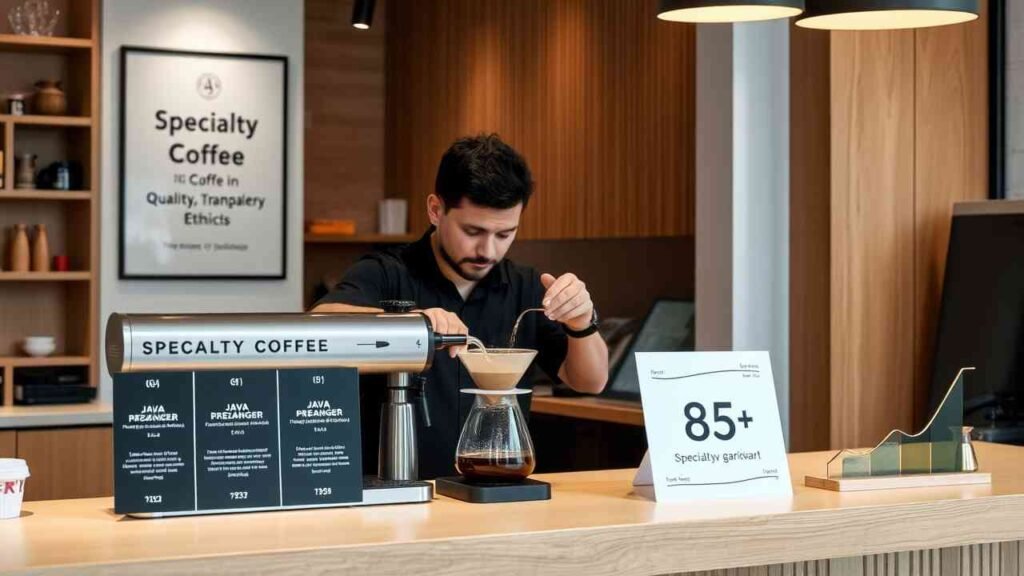
When exploring specialty coffee vs commercial coffee, you’re not just comparing two products – you’re examining fundamentally different approaches to quality, sustainability, and taste. Specialty coffee represents the top 1-3% of all coffee produced, scoring 80+ points on the Specialty Coffee Association’s (SCA) scale, while commercial coffee focuses on mass production and affordability. For those seeking authentic specialty-grade Java Preanger coffee, javapreanger.com offers direct access to 86-88 point SCA-rated beans from Indonesia’s volcanic highlands, showcasing what true specialty quality can achieve.
This comprehensive guide will examine:
✔ The official standards separating these coffee categories
✔ How farming and processing methods differ dramatically
✔ Flavor and quality comparisons you can taste
✔ Economic and environmental impacts
✔ How to identify and source genuine specialty coffee
Whether you’re a casual drinker or coffee professional, understanding these differences will transform how you select and appreciate your daily brew.
Defining Specialty and Commercial Coffee
Specialty Coffee:
-
SCA score of 80-100 points
-
0 primary defects per 350g sample
-
Traceable single origin (farm/region known)
-
Hand-picked ripe cherries
-
Artisanal processing methods
Commercial Coffee:
-
Below 80 SCA points
-
Up to 86 defects allowed per 350g
-
Blended origins (often untraceable)
-
Machine harvested (mixed ripeness)
-
Industrial processing
Example: Java Preanger from javapreanger.com consistently scores 86-88 points with full traceability to West Java farms.
Key Differences in Quality Standards
| Quality Factor | Specialty Coffee | Commercial Coffee |
|---|---|---|
| SCA Score | 80-100 points | Below 80 points |
| Defects Allowed | 0 primary, ≤5 secondary | Up to 86 total |
| Bean Uniformity | 95%+ same size/shape | Mixed sizes |
| Moisture Content | 10-12% precise | Often inconsistent |
| Freshness | Roast dates provided | “Best by” dates only |
Growing and Harvesting Practices Compared
Specialty Coffee Farming:
-
High altitude (1,200-2,000m)
-
Shade-grown (30-70% canopy)
-
Hand-picked (only ripe cherries)
-
Sustainable practices (organic matter, water conservation)
Commercial Coffee Farming:
-
Lower elevations (higher yields)
-
Full sun (no shade trees)
-
Strip-picked (all cherries harvested)
-
Chemical inputs (synthetic fertilizers)
Indonesia Insight: Java Preanger grows at 1,400m under shade trees, yielding complex flavors impossible in commercial farms.
Processing Methods: Artisan vs Industrial
Specialty Processing:
-
Washed: Fermentation tanks, clean cups
-
Natural: Sun-dried on patios, fruity
-
Honey: Partial fruit removal, balanced
-
Anaerobic: Controlled fermentation
Commercial Processing:
-
Bulk mechanical washing
-
Industrial dryers
-
Blended processing methods
-
Focus on efficiency over flavor
Flavor Profile Comparison
| Characteristic | Specialty Coffee | Commercial Coffee |
|---|---|---|
| Acidity | Bright, pleasant | Often harsh or flat |
| Sweetness | Natural cane sugar | Artificial/synthetic |
| Body | Velvety, rounded | Thin or watery |
| Aftertaste | Clean, lingering | Bitter, short |
| Complexity | 5+ discernible notes | 1-2 generic flavors |
Tasting Example: Java Preanger specialty coffee offers chocolate, caramel, and spice notes versus commercial coffee’s generic “coffee” flavor.
Price Differences and Value Proposition
| Factor | Specialty Coffee | Commercial Coffee |
|---|---|---|
| Price per lb (green) | $4-$30 | $0.80-$1.50 |
| Price per lb (roasted) | $15-$40 | $3-$10 |
| Value Proposition | Flavor experience | Affordability |
| Brews per bag | More flavorful cups | More but weaker cups |
Why Specialty Costs More:
-
Hand labor (picking, sorting)
-
Lower yields (only perfect cherries)
-
Fair farmer pay (2-4x commercial prices)
-
Small-batch roasting
The Impact on Coffee Farmers
Specialty Coffee Economy:
-
Living wages for farmers
-
Direct trade relationships
-
Quality premiums incentivize excellence
-
Community development projects
Commercial Coffee Economy:
-
Below poverty wages
-
Commodity market dependence
-
Price volatility risks
-
No quality incentives
Java Preanger Model: javapreanger.com pays farmers 30-50% above market rates for specialty-grade beans.
Environmental Considerations
| Aspect | Specialty Coffee | Commercial Coffee |
|---|---|---|
| Shade Cover | Maintains biodiversity | Deforested monocrops |
| Water Usage | Conservation practices | High-volume washing |
| Chemicals | Often organic | Synthetic inputs |
| Soil Health | Organic matter maintained | Degraded over time |
How to Choose Between Them
Choose Specialty Coffee When:
-
You value complex flavors
-
Ethical sourcing matters
-
You’ll use proper brewing methods
-
You drink coffee black
Choose Commercial Coffee When:
-
Budget is primary concern
-
Drinking with lots of milk/sugar
-
Making large batches
-
Flavor nuances won’t be noticed
FAQs About Specialty vs Commercial Coffee
1. Is specialty coffee stronger than commercial coffee?
No – it has more flavor complexity but similar caffeine content. The perceived “strength” comes from intensity of flavors.
2. Can you taste the difference in milk-based drinks?
Yes, but less pronounced. Specialty coffee makes better lattes, but commercial may suffice for sugary flavored drinks.
3. Where can I try real specialty coffee?
Quality-focused roasters like javapreanger.com offer authentic specialty beans with full traceability.
Conclusion: Experience the Difference
Understanding specialty coffee vs commercial coffee reveals why one costs more but offers transformative quality. For those ready to experience authentic Indonesian specialty coffee, javapreanger.com provides:
-
SCA 86+ point Java Preanger beans
-
Direct farm relationships in West Java
-
Sustainable growing practices
-
Fair prices for farmers
Taste the difference today – order your specialty coffee and discover what coffee was meant to be. ☕✨