
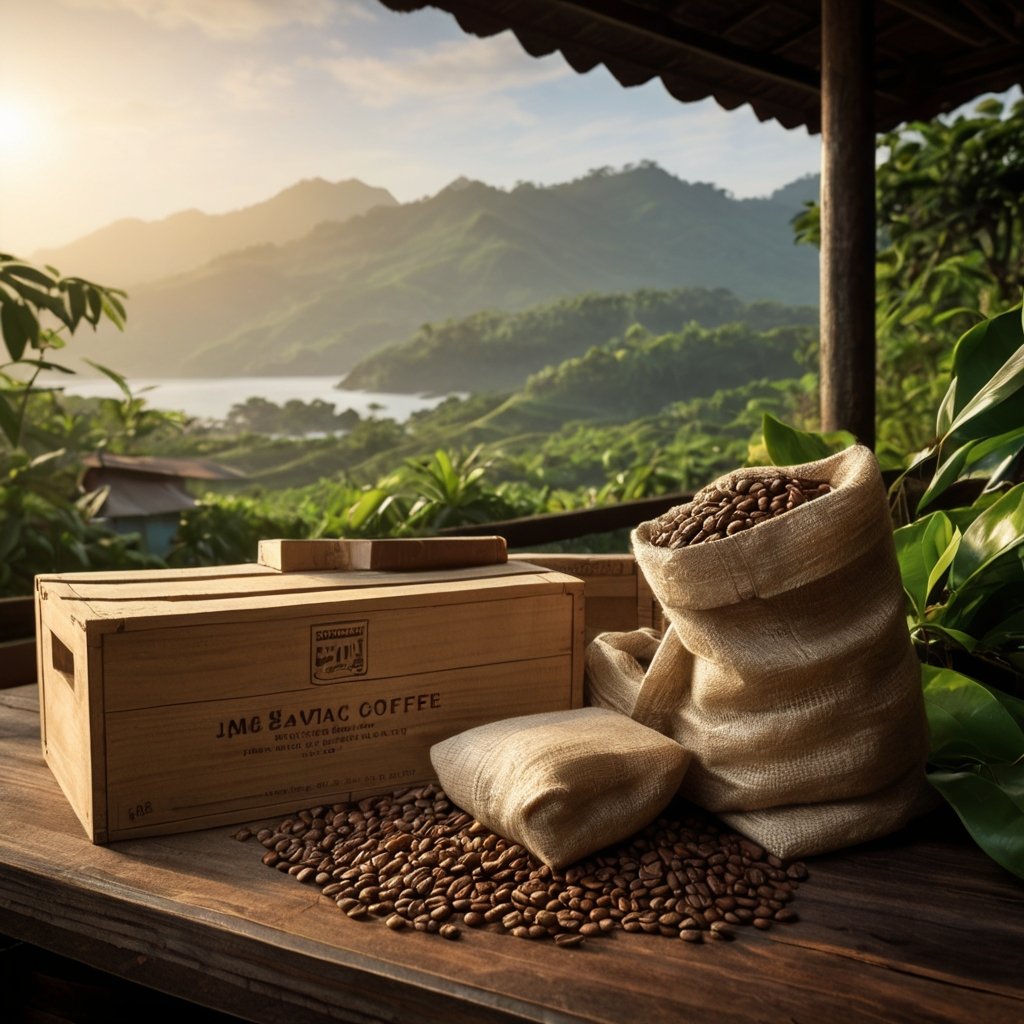
Ever wondered how to navigate the booming world of green coffee beans Indonesia export? If you’re a roaster, distributor, or café owner sourcing premium Indonesian beans, this guide delivers clarity on statistics, logistics, quality, and trade—plus why javapreanger.com is your smart partner for streamlined, traceable sourcing.
Table of Contents
The Significance of Green Coffee Beans Indonesia Export
Indonesia ranks among the top global coffee producers and exporters, particularly known for its green coffee beans—raw, unroasted beans that maintain full natural flavor. As roasters and traders increasingly seek origin-character and traceability, Indonesia’s green bean exports have become more valuable in international markets.
Current Export Statistics & Market Trends
-
In the 2024/25 season, Indonesia’s green bean exports are projected at ~5.2 million bags (60 kg), a rebound of 18% compared to the previous year.
-
Forecasts anticipate exports growing to 6.5 million bags by 2024/25 and steadily rising through 2028.
-
As of 2023, Indonesia accounted for approximately 6.8% of global green coffee production, and ranked #7 in export value of unroasted coffee ($915 million).
-
Major importers include the U.S. (12–16%), EU, Japan, Egypt, and ASEAN nations.
This upward trajectory reflects growing global demand for specialty and origin-driven coffees, especially from Southeast Asia.
Key Growing Regions & Bean Varieties
Indonesia’s diverse landscapes produce beans with distinctive flavor profiles:
-
Sumatran Gayo and Mandheling (wet-hulled).
-
Sulawesi Toraja (fruit-forward).
-
Java, including GI-protected Kintamani, with nutty chocolate notes.
-
Robusta beans remain globally significant, though Arabica imports supplement local supply.
Altitudinal variation and terroir drive this flavor diversity, making Indonesian exports appealing to a broad range of specialty roasters.
Processing Methods Unique to Indonesia
Indonesia’s unique methods directly shape its export reputation:
-
Giling Basah (wet-hulled): Semi-wet processing that dulls acidity and builds body—signature “Indonesian cup” profile.
-
Fully washed, honey, natural, and experimental anaerobic methods—catering to premium markets and competitive differentiation.
Export Logistics: What You Need to Know
Shipping Essentials
-
Containers ship via LCL/FCL sea freight, often bundled with other beans.
-
Air freight used for urgent or high-value micro-lots.
-
Beans are packed in jute sacks, vacuum packs, or eco-packs.
Documentation Checklist
-
Commercial Invoice & Bill of Lading
-
Phytosanitary Certificate
-
Certificate of Origin for GI varieties
-
Organic / Fair Trade certificates, when applicable
Logistics considerations include humidity control, shelf-life, customs tariffs, and container management—all services provided by expert exporters like javapreanger.com.
Pricing, Tariffs & Trade Policies
-
Export prices ranged from US$0.43 to $9.59 per kg in 2024, depending on bean type and market.
-
Indonesia has proposed a potential export ban on green beans, pushing for domestic processing—a move that could shift global supply dynamics.
-
New U.S. tariffs (32% on Indonesia, 46% on Vietnam) may reduce competitiveness in North American markets.
-
The EU’s Deforestation Regulation (EUDR) requires traceability to origin—delaying exports unless suppliers comply.
Regulatory and Certification Landscape
Indonesia’s exporters are increasingly adopting:
-
Geographical Indications (GIs) like Java Preanger.
- SCAI-backed cupping standards (85+ scores)
-
Traceability systems, some blockchain-backed.
These certifications help ensure compliance with international consumer and regulatory demands.
How to Source via Green Coffee Exporters
-
Define Requirements: volume, region (e.g., Java), variety, processing method, certification.
-
Request Samples: green and roasted, for quality and flavor evaluation.
-
Negotiate Terms: price, packaging, Incoterms (FOB/CIF/DDP).
-
Finalize Contract: including volume forecasts and delivery schedules.
-
Arrange Logistics: coordinate with a reliable exporter for shipping and documentation.
-
Inspect Quality On-Arrival: moisture content, cupping, and compliance.
javapreanger.com offers end-to-end support on sample evaluation, certification verification, and logistics.
Data Table: Export Volume & Forecast
| Year | Export Volume (Million Bags, 60 kg) | YoY Growth (%) |
|---|---|---|
| 2023 | 6.41 | — |
| 2024 | 6.47 (f) | +0.9% |
| 2025 | 6.53 (f) | +0.9% |
| 2026 | 6.59 (f) | +0.9% |
| 2027 | 6.65 (f) | +0.9% |
| 2028 | 6.71 (f) | +0.9% |
Forecasts sourced from industry analysis & ReportLinker projections .
Challenges in Green Coffee Export & Solutions
-
Tariffs & Trade Barriers: U.S./EU policies can impact pricing—diversify target markets.
-
Regulatory Uncertainty: Monitor proposed bans (e.g., unprocessed exports) and comply with EUDR traceability.
-
Quality Inconsistencies: Work with traceable, certified exporters like javapreanger.com.
-
Logistics Constraints: Use vacuum-sealed or eco-pack packaging to prevent moisture damage.
-
Yield Variability: Partner with exporters offering agricultural support to farmers for consistency.
FAQ: Green Coffee Beans Indonesia Export
Q1: Is Indonesia’s green bean export growing?
Yes—export volumes rose from ~5.2 M bags to 6.4 M in 2023, with moderate annual increases projected.
Q2: Does Indonesia ban unprocessed coffee exports?
A proposal exists, but it hasn’t been enacted; exporters are preparing for potential regulation.
Q3: Which countries lead in Indonesian green bean imports?
U.S. (12–16%), EU, Japan, Egypt, and ASEAN nations are primary markets.
Q4: What processing methods are unique in Indonesia?
Giling Basah (wet-hulled) is signature for full-bodied cups; fully washed, honey, natural, and anaerobic are also used.
Q5: How do I ensure compliance with EU due diligence rules?
Source from certified exporters offering full traceability (GI, organic, fair trade) like javapreanger.com.
Conclusion & How javapreanger.com Can Help
The green coffee beans Indonesia export market offers growth, diversity, and unique origin stories—but navigating exports, certifications, and logistics can be complex. That’s where javapreanger.com comes in.
As a trusted sourcing partner, we provide:
-
Certified, traceable beans from top Indonesian regions
-
Full export documentation including GI, organic, and fair-trade
-
Sample-based quality assurance before you commit
-
End-to-end logistics from farm to delivery
-
Guidance on market regulations, tariffs, and compliance
If you’re ready to elevate your coffee sourcing with reliable, high-quality Indonesian green beans, partner with javapreanger.com—your gateway to premium, traceable, and sustainable supply.