
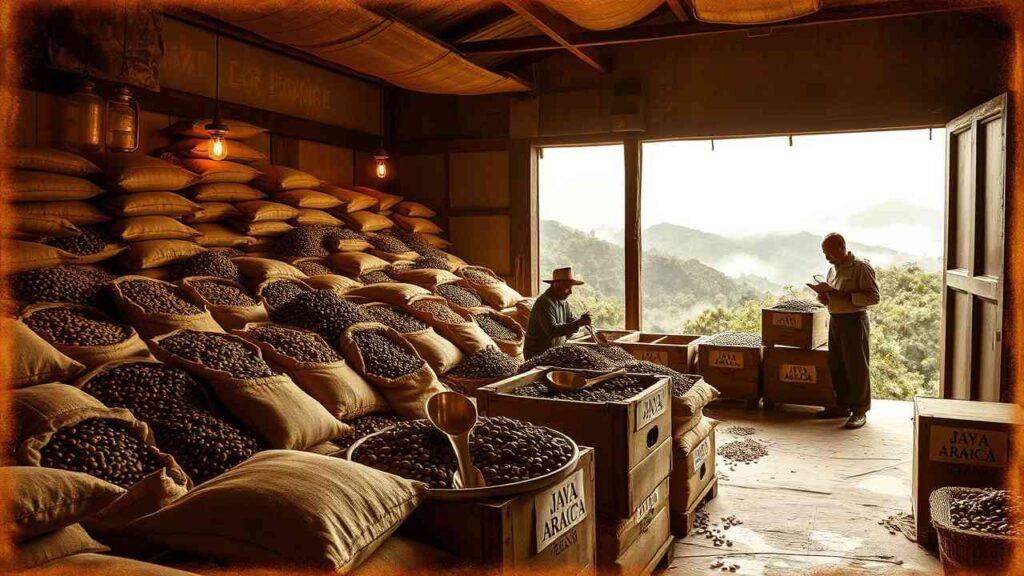
The global market for bulk unroasted coffee beans has grown exponentially, reaching $30.5 billion in 2024 as specialty coffee roasters and importers seek greater control over their product quality. Green coffee beans offer roasters the opportunity to develop unique flavor profiles while maintaining freshness for extended periods compared to roasted coffee. Whether you’re a commercial roaster, cafe owner, or coffee distributor, understanding how to source premium bulk unroasted coffee beans is essential for business success.
At Java Preanger, we specialize in supplying container loads of specialty-grade unroasted coffee beans from Indonesia’s finest growing regions, offering full traceability from farm to shipment. This comprehensive guide covers everything you need to know about purchasing bulk green coffee, from evaluating quality to navigating international logistics.
Table of Contents
-
Understanding Unroasted Coffee Beans
-
Benefits of Buying Coffee in Bulk
-
Top Producing Regions for Bulk Purchase
-
How to Evaluate Green Coffee Quality
-
Bulk Pricing Structures and Market Trends
-
The Complete Purchasing Process
-
Storage and Preservation Best Practices
-
Sustainable Sourcing Considerations
-
FAQ: Bulk Unroasted Coffee Beans
-
Partnering with a Reliable Green Coffee Supplier
Understanding Unroasted Coffee Beans
Key Characteristics of Quality Green Coffee:
-
Moisture content: 10-12% (ideal range)
-
Color: Uniform greenish-blue (no yellowing)
-
Density: Hard beans preferred (higher altitude)
-
Defects: ≤5 full defects per 350g (specialty grade)
-
Aroma: Fresh, clean, no mustiness
Green vs Roasted Coffee Comparison:
| Characteristic | Unroasted Beans | Roasted Beans |
|---|---|---|
| Shelf Life | 12-18 months | 4-6 weeks |
| Weight Loss | 0% | 15-20% |
| Flavor Potential | Maximum | Already developed |
| Caffeine Content | Stable | Degrades over time |
Pro Tip: Java Preanger green beans are hand-sorted to ensure ≤3 defects/350g, giving roasters exceptional raw material.
Benefits of Buying Coffee in Bulk
Advantages for Roasters:
-
Cost savings: 15-30% discount vs small quantities
-
Consistency: Larger lots maintain uniform quality
-
Customization: Ability to create signature blends
-
Freshness control: Roast as needed
-
Supply security: Guaranteed inventory
Typical Bulk Purchase Options:
| Quantity | Price/kg | Ideal For |
|---|---|---|
| 60kg (1 bag) | $10-$14 | Small roasters |
| 250kg (pallet) | $8-$12 | Medium operations |
| Container (18-20MT) | $6-$10 | Large roasters/importers |
Top Producing Regions for Bulk Purchase
1. Indonesia (Sumatra, Java, Sulawesi)
-
Flavors: Earthy, herbal to floral
-
Processing: Wet-hulled (Giling Basah)
-
Harvest: Varies by region (year-round availability)
2. Brazil (Minas Gerais, São Paulo)
-
Flavors: Nutty, chocolate
-
Processing: Natural/dry
-
Harvest: April-September
3. Colombia (Huila, Nariño)
-
Flavors: Balanced, caramel
-
Processing: Washed
-
Harvest: Main: Apr-Jul; Mitaca: Nov-Jan
Regional Comparison:
| Origin | SCA Score Range | Price/kg (2024) | MOQ |
|---|---|---|---|
| Indonesia | 82-87 | $8-$12 | 60kg |
| Brazil | 80-85 | $7-$11 | 250kg |
| Colombia | 83-87 | $9-$14 | 60kg |
How to Evaluate Green Coffee Quality
Visual Inspection Checklist:
-
Color consistency (no discoloration)
-
Bean uniformity (size and shape)
-
Defect count (broken, insect-damaged beans)
-
Moisture level (shouldn’t feel damp)
-
Aroma (clean, no mustiness)
Physical Tests:
-
Density test: Quality beans sink in water
-
Moisture test: 10-12% ideal
-
Screen size: Use calibration screens
-
Cut test: Check for internal defects
Roaster’s Insight: Always request 500g-1kg samples to conduct test roasts before large purchases.
Bulk Pricing Structures and Market Trends
2024 Price Benchmarks (FOB):
| Grade | SCA Score | Price Range | Typical Buyers |
|---|---|---|---|
| Specialty | 84+ | $12-$18/kg | Third wave roasters |
| Premium | 80-83 | $9-$12/kg | Specialty cafes |
| Commercial | <80 | $6-$9/kg | Commercial blenders |
Current Market Trends:
-
Direct trade growing: 25% increase year-over-year
-
Micro-lot demand: Unique small batches
-
Price volatility: Climate impacts on supply
-
Sustainability focus: Carbon-neutral shipping
-
Digital platforms: Online B2B marketplaces expanding
The Complete Purchasing Process
Step-by-Step Guide:
-
Define your needs (volume, quality, budget)
-
Research suppliers (origin trips recommended)
-
Request samples (multiple lots for comparison)
-
Conduct test roasts (multiple profiles)
-
Evaluate cuppings (SCA protocol)
-
Negotiate terms (price, payment, delivery)
-
Arrange logistics (shipping, insurance)
-
Quality control (pre- and post-shipment)
Storage and Preservation Best Practices
Ideal Storage Conditions:
-
Temperature: 15-20°C (59-68°F)
-
Humidity: 50-60% RH
-
Packaging: Breathable jute or GrainPro bags
-
Location: Dark, well-ventilated space
-
Rotation: FIFO (First In, First Out) system
Storage Life by Packaging:
| Packaging Type | Max Storage Duration |
|---|---|
| Jute bags | 9-12 months |
| GrainPro | 12-18 months |
| Vacuum-sealed | 18-24 months |
Sustainable Sourcing Considerations
Ethical Purchasing Practices:
-
Fair pricing: Pay farmers 25-40% above market
-
Community support: Fund education, healthcare
-
Environmental protection: Organic farming, reforestation
-
Long-term relationships: Multi-year contracts
Certification Benefits:
-
Organic: 15-20% price premium
-
Fair Trade: 10-15% premium
-
Rainforest Alliance: 5-10% premium
Case Study: Java Preanger farmers increased incomes by 35% through our direct trade program while implementing organic practices.
FAQ: Bulk Unroasted Coffee Beans
1. What’s the minimum order quantity?
Most suppliers require at least 60kg (1 bag), with better pricing at 250kg+.
2. How soon after harvest should I roast?
Optimal window is 2-10 months post-harvest for peak flavor.
3. What certifications should I look for?
Organic, Fair Trade, and Rainforest Alliance are most valuable.
4. How do I calculate green coffee needs?
Estimate 1.25kg green coffee yields 1kg roasted (20% weight loss).
5. What’s the best way to evaluate samples?
Roast to both light and medium profiles, then cup blind.
Partnering with a Reliable Green Coffee Supplier
For roasters seeking premium bulk unroasted coffee beans, Java Preanger offers:
-
Direct relationships with Indonesian farmers
-
SCA 83+ graded specialty lots
-
Flexible ordering from samples to containers
-
Technical support including roast profiling
Ready to source premium green coffee? Request our current offerings with complete cupping reports.